You cannot ignore faith
When demonstrating that it is worthwhile to believe in something, it becomes necessary to discard atheism as a coherent possibility of belief.
Atheism treats faith as optional or irrational. Yet the argument of this page shows that openness beyond the material is already present in science, in human nature, in moral life, and in prudence about eternity. Closing that openness is not neutrality; it is a refusal of reasons that already press upon us.
Why must atheism be discarded?
- Denying any meaning beyond matter contradicts the trust science itself requires in an ordered world.
- Reducing man to instinct cannot explain the rational soul, moral conscience, or the thirst for truth.
- Without God, good and evil lose an objective foundation and life drifts toward empty pleasure.
- Ignoring eternity while hoping for fullness is imprudent: communion with God after death requires desiring Him now.
Conclusion
If faith is this rational openness — and if science, human nature, morality, and prudence all point toward it — then atheism cannot remain a valid alternative, for it contradicts both reason and the human desire for truth, transcendence, and fullness.
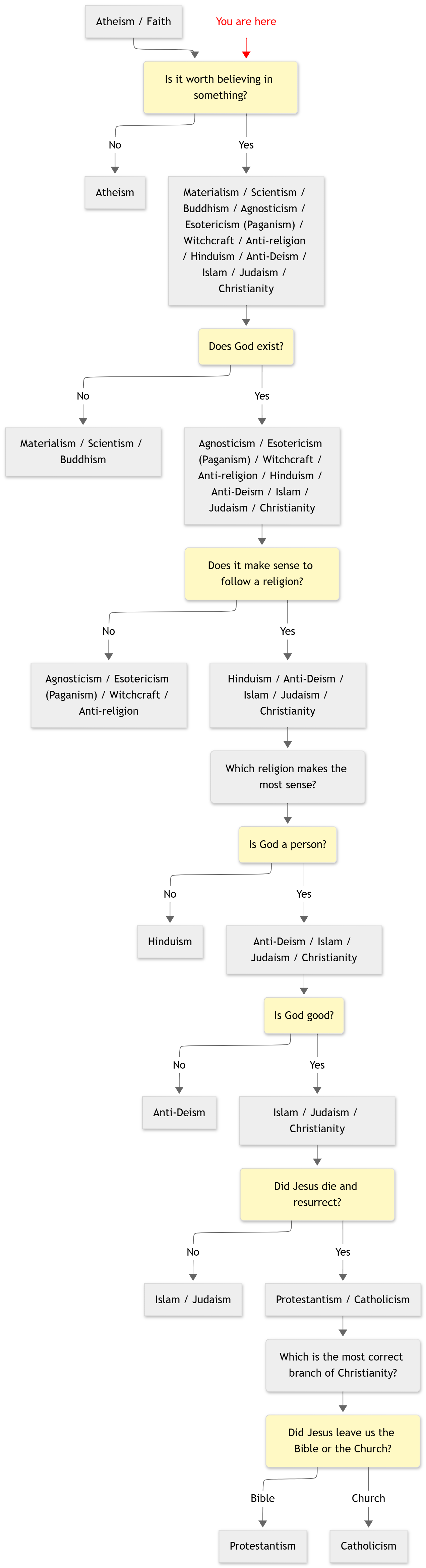
Faith, before any religion, is the rational admission that reality is not only material. Science itself rests on trust that nature is ordered. The gap between humans and animals reveals a rational soul, and the human being is a body–soul unity, not a clever animal. Without that openness, life tends toward empty pleasure and morality loses an objective foundation. Prudence therefore favors living as if eternity is real, and communion with God after death requires desiring Him in this life. To ignore faith is to refuse this whole line of reasons.
The argument

When we say 'faith,' many think first of rituals or institutions. Here, however, it means something more basic: recognizing that life contains more than what can be weighed and measured. It is like trusting that a friendship is worth more than the price of a gift, or that a sincere 'yes' has a value no scale can capture. Faith is the openness of the intellect to meaning and value. It does not discard reason — it broadens it. By admitting that reality is intelligible and purposeful, we set mind and heart in motion toward truth — and later, if desired, discern a concrete religion.
- Joseph Ratzinger - Introduction to Christianity
- Edward Feser - Five Proofs of the Existence of God
- Alister McGrath - The Twilight of Atheism
- Ecclesiastes 3:11 - He has also set eternity in their hearts.
- Romans 1:20 - Ever since the creation of the world, His invisible attributes have been clearly seen through His works.
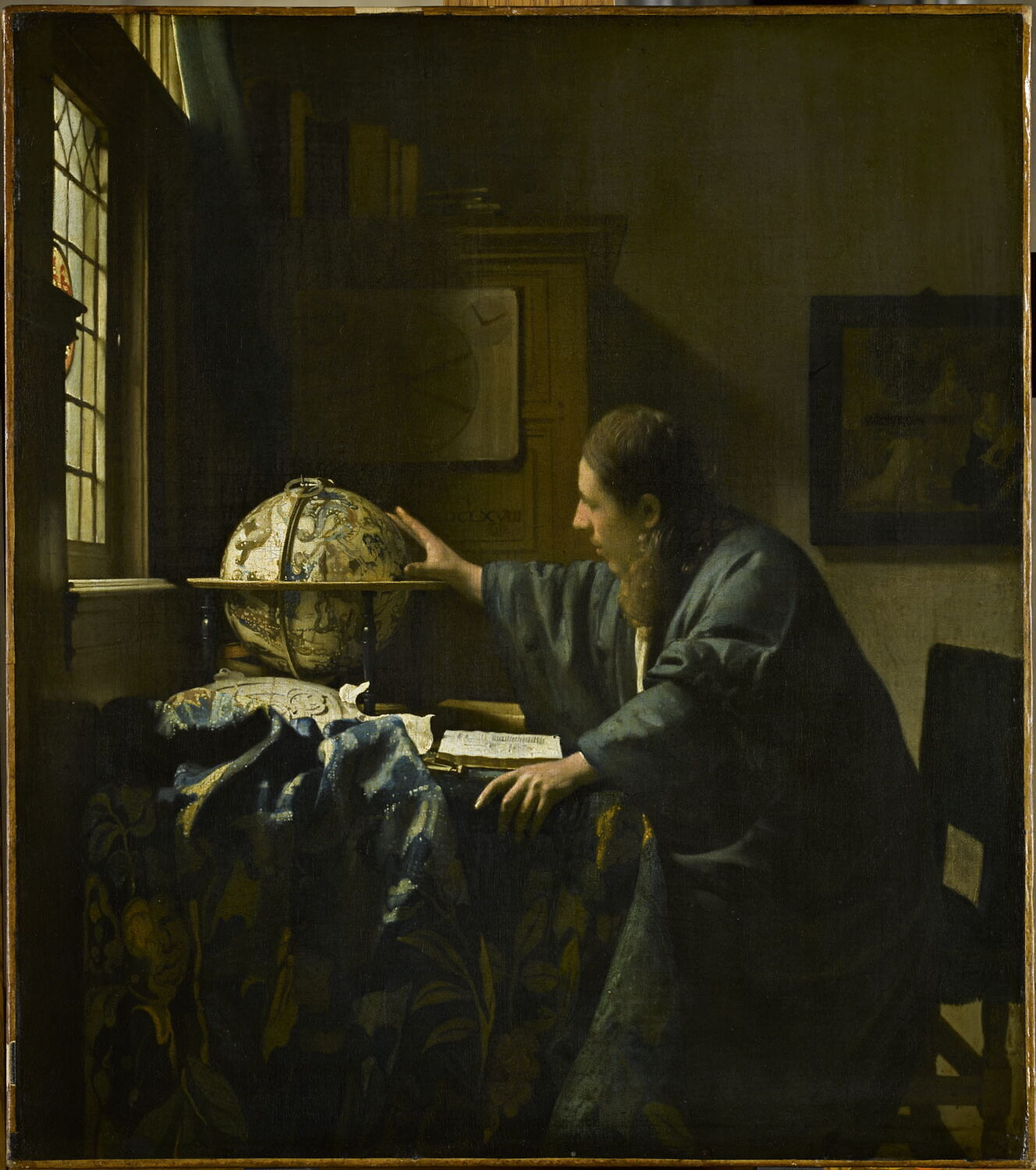
Every scientist works on the trust that nature has stable laws and that our minds can understand them. This is a rational act of faith: without it, there would be no experiments, no applicable mathematics, and no reliable prediction. Faith does not replace the laboratory; it makes it possible by admitting that the universe is intelligible. Historically, this trust flourished in a theistic culture that saw the world as God’s ordered creation. Believing that 'there is meaning' is not anti-scientific; it is the soil in which science grows.
- Stanley L. Jaki - The Savior of Science
- John Polkinghorne - Science and Providence
- Albert Einstein - The World as I See It
- Wisdom 13:1 - All men who were ignorant of God were foolish by nature, and they were unable to know Him who exists through the good things that are seen.
- Romans 1:20 - His invisible attributes are clearly perceived in the things that are made.

A monkey may use tools, but man composes symphonies, creates art, keeps promises, and dies for ideals. The difference is not only of degree but of kind. We plan for the future, seek beauty, and question ultimate meaning — signs of a spiritual dimension. If we were only refined instinct, food, drink, and sex would suffice for happiness. Yet the epidemic of anxiety and depression proves that we crave truth, love, and goodness. This points to an immaterial principle: the rational soul.
- John Eccles - Evolution of the Brain: Creation of the Self
- Roger Scruton - The Soul of the World
- Thomas Nagel - Mind and Cosmos
- Genesis 1:27 - God created man in His image.
- Ecclesiastes 12:7 - The dust returns to the earth and the spirit returns to God who gave it.
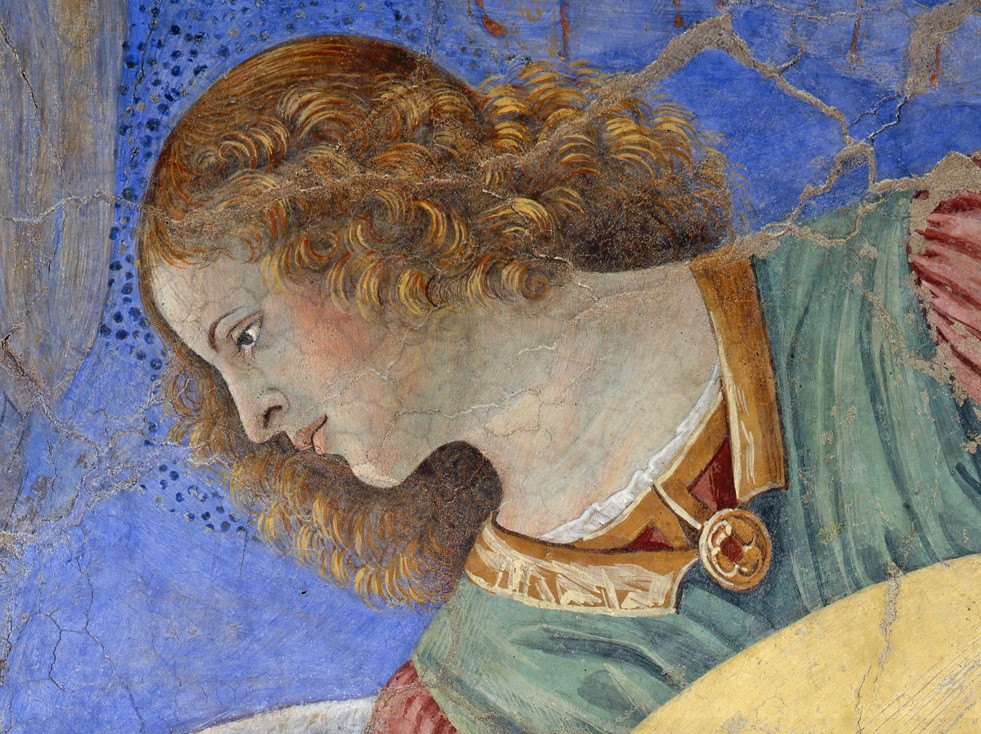
Christian tradition describes creation in ascending order: matter, life, sensitivity, spirit. Man unites them all: body, senses, reason, and spiritual freedom. He is not a clever animal reduced to instinct, nor a spirit trapped in flesh. Thus he loves the visible world yet longs for something higher. It is not contempt for the body but its elevation — like an instrument tuned by the soul. This vision explains why we flourish when we unite virtue, beauty, and truth: we were made for a good that embraces the earth while pointing to heaven.
- Thomas Aquinas - Summa Theologica
- Karol Wojtyla - The Acting Person
- Catechism of the Catholic Church - Parts I and III
- Genesis 2:7 - The Lord God formed man from the dust of the ground and breathed into his nostrils the breath of life.
- Matthew 10:28 - Do not fear those who kill the body but cannot kill the soul.
- Hebrews 1:14 - Are they not all ministering spirits sent forth to serve those who will inherit salvation?

When the heart stops seeking higher meaning, it compensates with easy stimuli: endless screens, food for anxiety, relationships without commitment. It’s like drinking seawater: the more you drink, the thirstier you become. Pleasure is good when ordered, but without faith or purpose it becomes addiction, fatigue, and sadness. Psychology confirms that purpose sustains us; pleasure alone cannot. Faith does not rob joy — it gives it direction, like rails that let a train run freely without derailing.
- Viktor Frankl - Man's Search for Meaning
- Jonathan Haidt - The Happiness Hypothesis
- Robert Lustig - The Hacking of the American Mind
- Galatians 5:22 - The fruit of the Spirit is love, joy, peace...
- 1 John 2:15-17 - Do not love the world or the things in the world.

If everything is chance and force, why shouldn't 'the strongest wins' be right? Without reference to the Good itself, rules shift with convenience. Faith in God asserts that there is a Good that precedes us, a law written in the heart, a just Judge. This does not eliminate ethical debate; it grounds it. Like road signs, objective moral law prevents everyone from inventing their own way at every turn. Thus human dignity, justice, and rights cease to be preferences and become obligations.
- Alasdair MacIntyre - After Virtue
- C.S. Lewis - The Abolition of Man
- Jacques Maritain - Man and the State
- Psalm 14:1 - The fool says in his heart, 'There is no God.'
- Romans 2:15 - The law is written on their hearts.
- Micah 6:8 - To act justly, to love mercy, and to walk humbly with your God.

Consider two paths: living as if life ends in the grave, or as if it continues into eternity and judgment. If there is no afterlife, what has the believer lost? Virtue, balance, charity, strong relationships, and hope. But if there is, what has the unbeliever lost? Everything — the Supreme Good. It is like wearing a seatbelt: if nothing happens, it does no harm; if something happens, it saves. This wager is not superstition but prudence — recognizing that the cost of being wrong in unbelief is infinitely greater than that of believing and living well.
- Blaise Pascal - Pensées
- Peter Kreeft - Christianity for Modern Pagans
- William Lane Craig - On Guard
- Deuteronomy 30:19 - I have set before you life and death... therefore choose life.
- Matthew 16:26 - What good will it be for a man to gain the whole world, yet forfeit his soul?
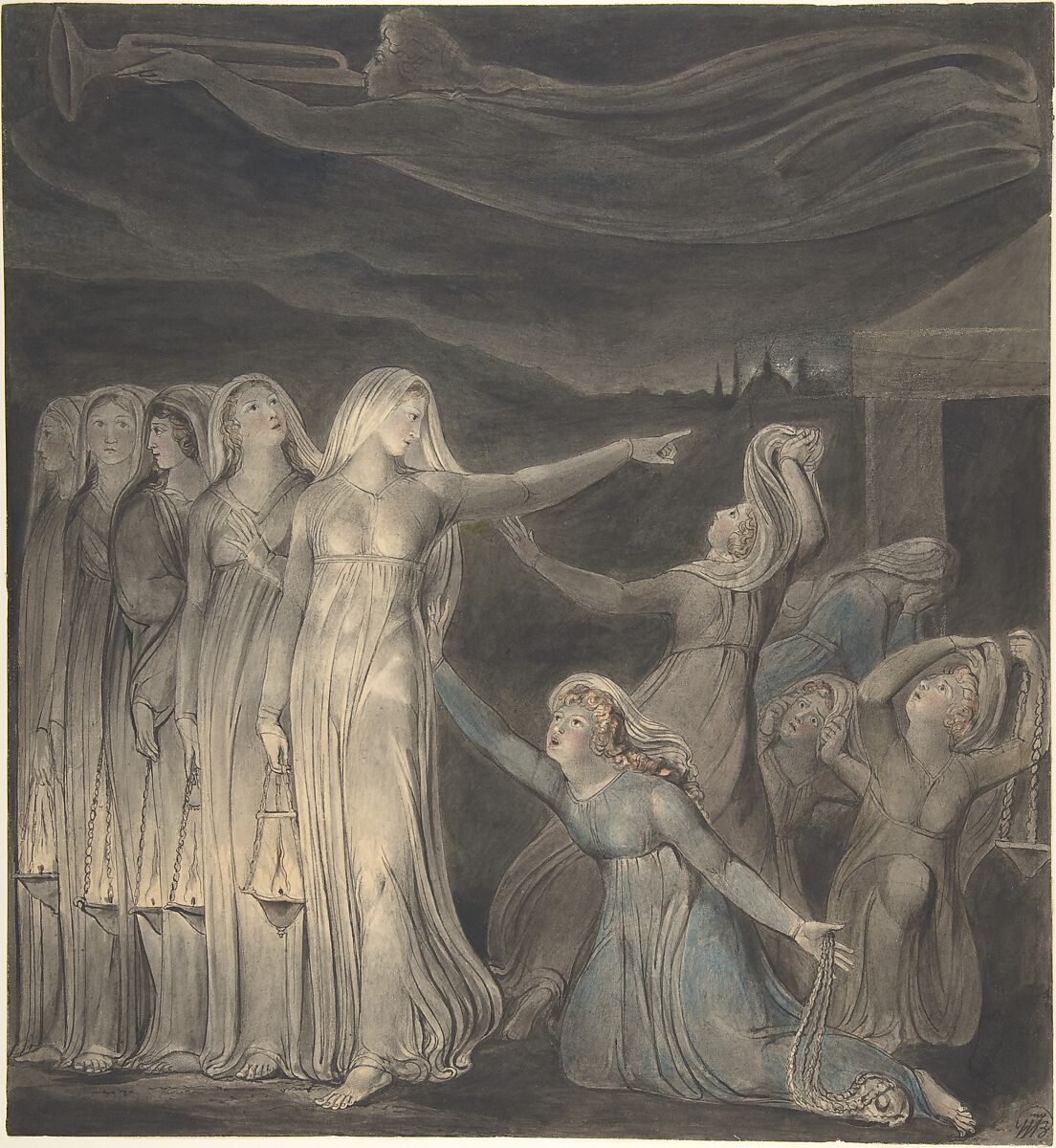
If someone spends life avoiding God, ignoring prayer, and rejecting goodness, how could they expect communion with Him after death? It is like ignoring a friend for years and then expecting instant intimacy. God respects freedom: whoever does not seek Him, does not prepare to live with Him. Seeking God is like training for a desired journey; without preparation, arrival has no joy. Faith begins with an honest desire: 'I want to know the Truth.' Without that desire, eternity with God would be strange to one who always refused Him.
- C.S. Lewis - The Great Divorce
- Saint Augustine - Confessions
- Joseph Ratzinger - Spe Salvi
- Matthew 7:7 - Ask and it will be given to you; seek and you will find.
- Jeremiah 29:13 - You will seek me and find me when you seek me with all your heart.
- Revelation 3:20 - Behold, I stand at the door and knock.