
Faith and reason are not enemies
If faith and reason are not enemies, then two opposite postures become incoherent: scientism, which treats faith as the enemy of knowledge, and fideism, which treats reason as the enemy of faith.
1. Scientism
Scientism claims that only science produces valid knowledge, so faith is at best private and at worst superstition. That is not science; it is a philosophical extra. If faith and reason are partners, then “faith versus science” is not a live option. It misreads both.
2. Fideism
Fideism claims that faith must silence reason: to believe is to stop thinking. That also makes enemies of partners. If the Claim holds, faith is not a veto on inquiry. Reason remains a way of receiving truth; faith illumines it.
Conclusion
The Claim does not pick a winner in a war. It denies that the war is real. Scientism and fideism are both ruled out as coherent ways of relating faith and reason.
The claim that only science explains reality cannot itself be proven scientifically. Science explains how things work, not why they exist, and it presupposes trust that the world is rational. Many great scientists in history were believers, and modern science grew from Christian theology. Science also cannot decide moral values. Faith and reason therefore complement each other rather than cancel each other.
The argument

If science is defined as the study of physical phenomena, then the statement that only science explains truth is self-contradictory, since it cannot prove itself by scientific means. That claim is a philosophical thesis smuggled in as method. Faith and philosophy are necessary to complement reason: they ask what counts as explanation, what reality is, and whether matter is all there is. Scientism is not science; it is an extra belief wearing a lab coat.
- Karl Popper - The Logic of Scientific Discovery
- Alister McGrath - The Territories of Science and Religion
- Hebrews 11:1 - 'Faith is the realization of what is hoped for and evidence of things not seen.'
- Romans 1:20 - 'Ever since the creation of the world, his invisible attributes... have been understood through what he has made.'

Gravity, atoms, and forces are well described by science, but the ultimate reason for their existence goes beyond natural sciences. A map of mechanisms is not a reason for being. Faith provides the horizon that allows understanding the meaning of creation: that there is something rather than nothing, and that the order we measure is not a brute accident without intelligibility. How and why are different questions; confusing them makes enemies of partners.
- Stephen Hawking - A Brief History of Time
- Thomas Nagel - Mind and Cosmos
- Genesis 1:1 - 'In the beginning, God created the heavens and the earth.'
- Colossians 1:16 - 'For in him were created all things in heaven and on earth...'
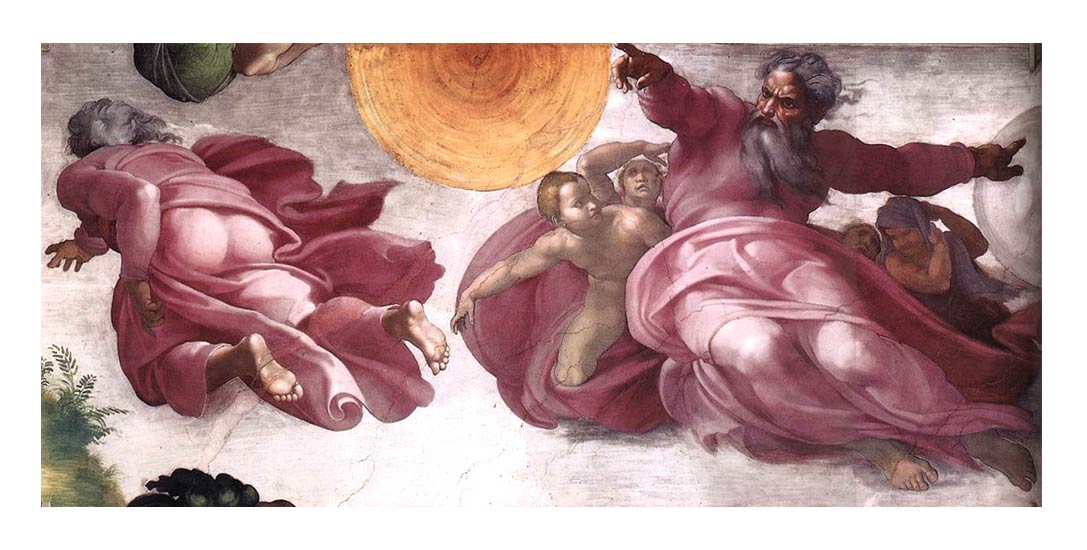
Scientific research is possible only if one trusts that nature is stable, ordered, and understandable. Experiments assume that tomorrow’s world will rhyme with today’s. This conviction is not the output of a single experiment; it is prior trust. Historically it flowered where people believed the universe was created rationally by God. Faith and reason meet here: the laboratory rests on a faith that the world is worth knowing.
- Stanley Jaki - The Savior of Science
- Rodney Stark - For the Glory of God
- Wisdom 11:20 - 'You have disposed all things by measure and number and weight.'
- Sirach 1:8 - 'He has poured her forth upon all his works, upon every living thing according to his bounty; he has lavished her upon his friends.'
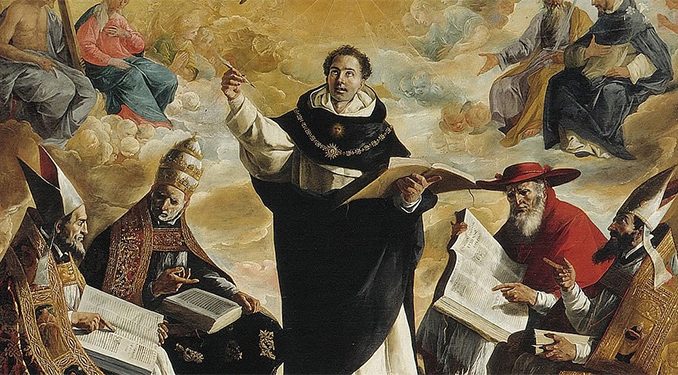
Figures such as Gregor Mendel, Georges Lemaître, and Isaac Newton show that faith and science were not opposed, but harmonized in the search for truth. Their belief did not replace measurement; it motivated patience, honesty, and wonder before an ordered creation. The caricature of the scientist as necessarily an unbeliever fails against the historical record: many of the people who built modern science prayed as they worked.
- Peter Harrison - The Territories of Science and Religion
- John Hedley Brooke - Science and Religion: Some Historical Perspectives
- Wisdom 7:17 - 'For he gave me sound knowledge of existing things...'
- Psalm 19:2 - 'The heavens declare the glory of God; the firmament proclaims the works of his hands.'

As Alfred North Whitehead argued, the insistence on a rational God and ordered creation in medieval theology laid the groundwork for modern science. Universities, the idea of universal laws, and the confidence that nature can be known grew in a Christian culture. The myth of the 'dark ages' does not match the historical growth of knowledge. This is a different support from listing believer-scientists: it is about the intellectual soil in which science as a sustained enterprise could grow.
- Alfred North Whitehead - Science and the Modern World
- Edward Grant - God and Reason in the Middle Ages
- Proverbs 25:2 - 'It is the glory of God to conceal a matter, and the glory of kings to search it out.'
- John 1:3 - 'All things came to be through Him, and without Him nothing came to be.'

Science can describe means, such as the lethal dose of poison, but it cannot answer whether it is right or wrong to use it. Facts about what happens do not by themselves yield duties about what ought to happen. Morality comes from natural law and divine revelation, not from laboratories. Faith and reason again cooperate: reason discerns the good; faith illumines and confirms it. Treating science as a moral oracle confuses measurement with judgment.
- Alasdair MacIntyre - After Virtue
- Hans Jonas - The Imperative of Responsibility
- Deuteronomy 30:19 - 'I have set before you life and death, the blessing and the curse. Choose life...'
- Matthew 22:37-39 - 'You shall love the Lord, your God... You shall love your neighbor as yourself.'