Jesus founded a Church, not a book
If Jesus founded a Church and not merely a book, then Protestantism and its branches — whose doctrinal foundation is private interpretation of Scripture — cannot stand as a coherent option.
That proposal assumes:
- each individual can interpret the Bible on their own;
- authority lies solely in the written text;
- the visible Church has no definitive normative role.
Those premises collide with the Claim. A Church with teaching authority cannot be optional chrome around a self-interpreting book. If Christ instituted a living community to bind, loose, and transmit the faith, then “Scripture alone, each reader the judge” is not a rival answer to the Hook; it is incompatible with what Jesus left.
Abuses by members of the Church do not reopen private interpretation as a coherent substitute. The implication of the Claim is that the Protestant view is ruled out as a viable option, not that the Church’s history must first be re-argued here.
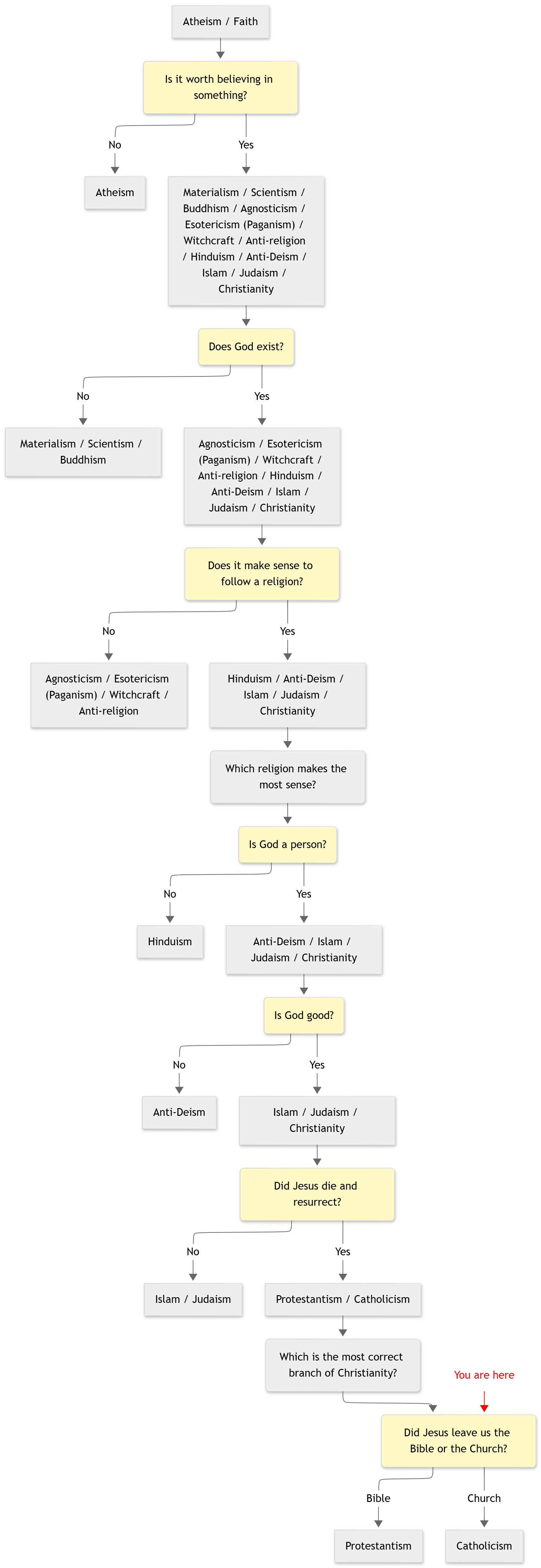
Jesus chose Twelve with a governing office, distinct from the rest of the faithful. Twelve apostles mirror the twelve tribes: the Church is the new Israel. The Incarnation is relational and sacramental: He formed a living body, not a text. The Bible does not teach itself as the only rule of faith. The Church discerned the canon; Christians already lived the apostolic faith. Without a living Magisterium, every opinion claims equal weight. Peter’s primacy and the keys ground the Church’s unity. Therefore Jesus founded a Church, not a book.
The argument
.jpg)
Among many disciples, Jesus selected only twelve names and sent them to teach, baptize, and shepherd. This distinction was not decorative: it indicated order, authority, and responsibility. The Twelve are the seed of the episcopate: they receive public mission, the power to bind and loose, and Christ’s promise of assistance. The rest of the faithful do not lose dignity, but the apostles/bishops have their own office to govern and confirm their brothers in faith.
- Joseph Ratzinger (Benedict XVI) - Called to Communion
- N. T. Wright - Paul and the Faithfulness of God
- Scott Hahn - Kinship by Covenant
- Matthew 28:19-20 - “Go therefore and make disciples... I am with you always...”
- 1 Corinthians 11:23 - “I received from the Lord what I also handed on to you...”
- Acts 2:42 - “They devoted themselves to the apostles’ teaching, to the breaking of bread, and to prayers.”

In the Old Testament, God organized His people into twelve tribes. In the New Testament, Christ chose twelve apostles to govern His new people, signaling both continuity and perfection. This is a second support, not a restatement of office alone: the number and structure show covenant identity. The Church is not a loose group of believers but a family with apostolic governance and mission to the nations; built upon the apostles, she remains one and catholic — the new, universal Israel.
- Scott Hahn - Kinship by Covenant
- Brant Pitre - Jesus and the Jewish Roots of the Church
- John H. Elliott - A Home for the Homeless
- Matthew 5:17 - “Do not think that I have come to abolish the Law... but to fulfill it.”
- Ephesians 2:19-20 - “Built upon the foundation of the apostles and prophets...”
- Revelation 21:14 - “The wall of the city had twelve foundations... the twelve apostles of the Lamb.”

God takes on flesh, calls apostles, and establishes a visible communion sealed by the sacraments. If a book were enough, there would have been no reason for Him to be born, to choose the Twelve, and to say 'do this in memory of me.' Salvation is a living encounter with a Person in the Body of the Church, where Word and Sacrament walk together.
- Hans Urs von Balthasar - Theodrama (vol. II)
- Joseph Ratzinger - Introduction to Christianity
- Henri de Lubac - Catholicisme
- Matthew 28:19 - “Baptizing them...”
- Luke 22:19 - “Do this in memory of me.”
- John 1:14 - “The Word became flesh...”
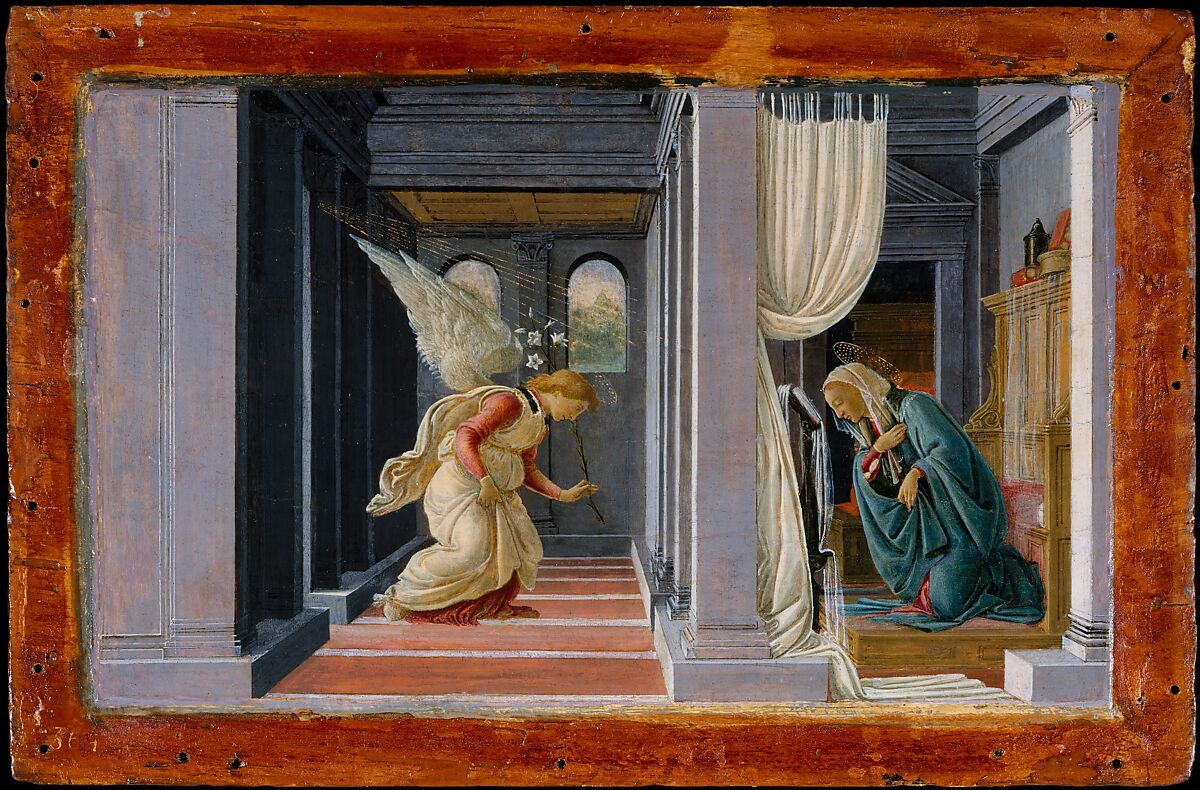
If God intended an autointerpretive system, He would have commanded it. Instead, the apostles transmitted the faith 'by word of mouth and by letter,' and Paul commands to 'hold fast to the traditions.' The Church is 'the pillar and foundation of truth.' The Word became flesh and entrusted the faith to a living Tradition within the Church. Faith is received in communion, through authorized teaching, not through private readings detached from the ecclesial body.
- Yves Congar - Tradition and Traditions
- Jaroslav Pelikan - The Christian Tradition: A History of the Development of Doctrine
- J. N. D. Kelly - Early Christian Doctrines
- John 1:14 - “And the Word became flesh...”
- 2 Thessalonians 2:15 - “Stand firm and hold to the traditions... by word or by letter.”
- 1 Timothy 3:15 - “The Church... is the pillar and foundation of the truth.”

Apostolic writings circulated and, gradually, the Church recognized which books were proclaimed as the Word of God in the liturgy. Ecclesial consensus and councils confirmed the list. Before the canon was closed, Christians already lived by the apostolic faith. The Bible depends on the Church’s judgment to be known as inspired Scripture; thus, Scripture and Magisterium mutually imply each other.
- Joseph T. Lienhard, S.J. - The Bible, the Church, and Authority: The Canon of the Christian Bible in History
- Bruce M. Metzger - The Canon of the New Testament
- Gary Michuta - Why Catholic Bibles Are Bigger
- Acts 15:28 - “It seemed good to the Holy Spirit and to us...”
- 2 Peter 3:16 - “...there are some things hard to understand...”
- John 21:25 - “There are also many other things that Jesus did...”
.jpg)
Without a common authority, contradictory doctrines proliferate. From the earliest times, the Church decided in communion: 'It seemed good to the Holy Spirit and to us.' With the Church, the received truth remains one. Christian freedom flourishes in service to the truth received, not in the relativism of private interpretations.
- John Henry Newman - An Essay on the Development of Christian Doctrine
- Jaroslav Pelikan - The Christian Tradition
- Thomas Howard - Evangelical Is Not Enough
- Acts 15:28 - “It seemed good to the Holy Spirit and to us...”
- Matthew 18:17-18 - “Tell it to the Church... whatever you bind on earth...”
- 2 Peter 3:16 - “...there are some things hard to understand...”

Jesus declares Peter to be the rock and entrusts him with the keys, promising the Church’s indefectibility. The power to bind and loose guarantees the faithful preservation of doctrine and discipline. Peter’s primacy serves the communion of the apostolic college and the entire Church — grounding authority and unity together.
- François Dreyfus, O.P. - The Gospel According to Saint Matthew
- Joseph Ratzinger - Called to Communion
- Francis A. Sullivan - Magisterium: Teaching Authority in the Catholic Church
- Matthew 16:18-19 - “You are Peter... I will give you the keys...”
- Luke 22:32 - “Strengthen your brothers.”
- Matthew 18:18 - “Whatever you bind on earth...”